

 SAKIGAKE管理人
 Introduction
We are pleased to share that an interview with our CEO, Munetoshi Kondoh, has been featured in the official media of the Tokyo Metropolitan Government — a platform dedicated to communicating Tokyo’s appeal, technology, and startup ecosystem to audiences both at home and abroad.
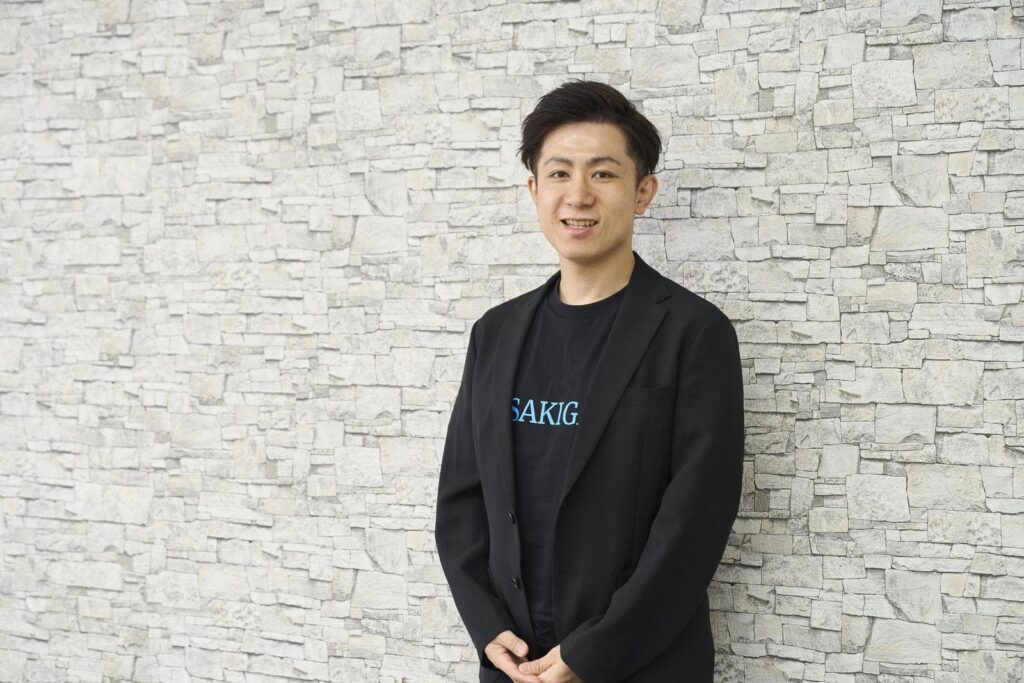
SusHi Tech Tokyo stands for ‘Sustainable High City Tech,’ and is a global innovation conference hosted by the Tokyo Metropolitan Government with the vision of realizing sustainable cities through advanced technology. SAKIGAKE JAPAN made its first appearance at the event in May 2025, and this interview was realized as a direct result of that experience. The theme of the interview was ‘Bringing Resilience into Everyday Life’ — a wide-ranging conversation about our company’s vision and the possibilities that Tokyo as a city holds, going beyond the boundaries of disaster prevention technology.
What We Shared in the Interview ① — The Concept of Phase Free
The central theme of the interview was the concept of ‘Phase Free.’
‘Preparedness for disasters should not be something we only think about in an emergency’ — this is the foundational belief at SAKIGAKE JAPAN. If the products and services we use in our daily lives are designed to also be useful in times of crisis, then they simultaneously improve the quality of everyday life while helping us prepare for the unexpected. Rather than allowing disaster preparedness to be treated as a cost that disappears into the background, embedding it into daily life allows it to continuously generate value — that is the essence of Phase Free.
A concrete example is the photoluminescent guidance signage now appearing in transit hubs and public spaces. Requiring no electricity and highly visible in dark conditions, these signs contribute to safety and convenience in normal times, and serve as wayfinding aids during power outages. ‘There is no need to change how they are used. They simply continue to function,’ as Kondoh put it.
What We Shared in the Interview ② — Resilience Has Become a ‘Management Issue’
There was a time when disaster preparedness was handled by a specific department within an organization. That is now changing fundamentally.
Small and medium-sized enterprises in particular are facing a structural challenge — the aging of management and the absence of successors — which is leaving a growing number of organizations without the capacity to recover from a single major blow. ‘In the past, there was a sense that you could always rebuild eventually. But many organizations today feel they simply do not have the time or resources left to rebuild after the fact,’ Kondoh explained.
The risks of today extend beyond natural disasters. In an era of global supply chains, disruptions can be triggered far from Japan’s shores, and ‘geopolitical instability is also part of the risk landscape. Everything is connected’ — this awareness lies at the core of SAKIGAKE JAPAN’s business approach.
What We Shared in the Interview ③ — Tokyo as ‘Laboratory’ and ‘Model’
The interview also touched extensively on Tokyo itself as a city.
Tokyo is a high-density urban environment in every sense — in population, infrastructure, and commerce. When something goes wrong, the effects can spread quickly. At the same time, from building codes and transportation systems to the details of urban design, the city’s approach to safety is highly sophisticated.
The next step Kondoh advocates for Tokyo is what he calls ‘distributed functional reinforcement’ — a system in which, if one district is affected, other districts can continue to operate and provide backup. ‘If Shibuya is impacted, Shinjuku can still function. When the entire system does not go down simultaneously, resilience is enhanced,’ he explained.
Solutions proven effective here can then be applied to other high-density cities around the world. Tokyo — encompassing its waterfront areas and remote islands — serves as a ‘laboratory’ capable of stress-testing resilience strategies under diverse conditions, while also functioning as a ‘model city’ for the rest of the world. This is one of the reasons SAKIGAKE JAPAN continues to be based in Tokyo.
What We Gained from SusHi Tech Tokyo 2025
The background to this interview lies in our experience at SusHi Tech Tokyo 2025, where we exhibited for the first time in May 2025.
SusHi Tech Tokyo 2025 was held at Tokyo Big Sight from May 8 to 10, and was one of Asia’s largest startup conferences, expecting over 50,000 visitors. Our booth was packed throughout the event, welcoming visitors from across Japan as well as from Asia, the Middle East, and Europe.
While climate-related solutions have become common at global innovation events, disaster prevention technology remains a relatively small category. That very scarcity, however, became a tailwind. ‘I felt that disaster preparedness is finally beginning to be seen as a domain of innovation — not just emergency response,’ Kondoh reflected.
The perspective that resonated most strongly was that ‘tools designed for preparedness can also support everyday operations.’ ‘When people realize these tools are also useful in daily life, it changes how they perceive them’ — it was the moment when the concept of Phase Free crossed borders.
Concrete Solutions — Phase Free in Practice
The interview also introduced specific solutions offered by SAKIGAKE JAPAN.
An AI- and cloud-based platform that visualizes weather conditions and flood risk holds particular relevance in Tokyo, where intense localized rainfall is increasingly common. It contributes to risk assessment, early preparedness, and improved drill precision in specific areas.
KORIN (光燐) is a photoluminescent paint that glows naturally for more than 12 hours in the dark — functional in darkness and disaster situations without the need for electricity.
Portable helipads are another example of Phase Free in action. Even in locations where permanent landing infrastructure is not justified, they expand landing options and improve accessibility in both urban and remote settings.
Closing — From Tokyo to the World
‘When disaster preparedness is not treated as something special, but approached with curiosity and even a sense of playfulness, it becomes a habit that serves us every day. That is what true resilience looks like.’
Being featured in the Tokyo Metropolitan Government’s official media is a great source of encouragement for our team, and at the same time, a renewed confirmation of our mission. To take the concept of resilience — refined in one of the world’s most high-density cities — and deliver it to every place, both at home and abroad, where it is needed. That is SAKIGAKE JAPAN’s challenge going forward.
The full interview (in Japanese and English) is available at the links below.
▶ Full interview (English)
▶ Full interview (Japanese)