
 SAKIGAKE管理人
 — The Current State of Decommissioning and the Responsibility of a Site That Continues to Learn from Failure
On January 7, 2026, we made our first business trip of the year to the Fukushima Daiichi Nuclear Power Plant. Nearly fifteen years have passed since the Great East Japan Earthquake and the subsequent nuclear accident. Today, Fukushima Daiichi is not only a place that preserves the memory of the accident, but also a site where one of the world’s most unprecedented, long-term, and technically complex decommissioning projects continues to move forward.
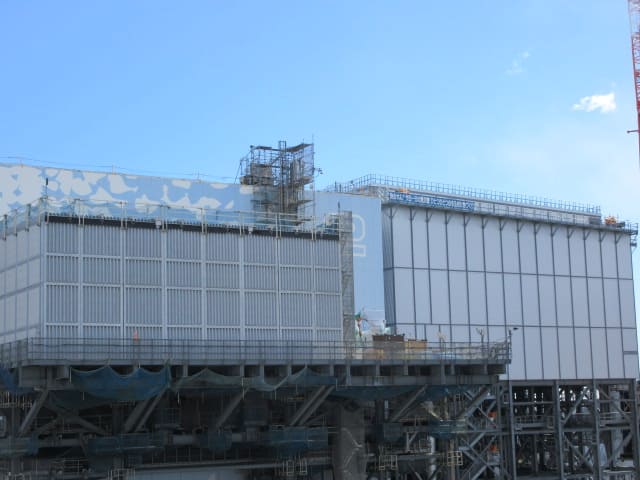
This visit was conducted as part of an international inspection program coordinated through the University of Tokyo. Prior to entering the site, we received detailed briefings on the overall decommissioning roadmap, safety management systems, and the principles guiding information disclosure. The objective was not simply to tour the facility, but to structurally understand how Japan responded to an unprecedented crisis, and how its systems, operations, and on-site practices have been rebuilt since then.
It was also an opportunity to verify, firsthand, what cannot be fully conveyed through reports or media coverage alone: the current state of decommissioning, what has changed, what has not, and what continues to evolve on the ground.
Steadily Advancing Decommissioning Milestones
At the site, representatives from Tokyo Electric Power Company (TEPCO) and related organizations provided systematic explanations of decommissioning progress. The inspection was conducted under strict safety protocols along predefined routes, designed so that even non-specialists could gain a comprehensive understanding of the overall structure of the decommissioning process.
Several points left a particularly strong impression:
- Completion of spent fuel removal from Units 3 and 4
One of the highest-risk tasks identified immediately after the accident has been completed steadily over many years. - Successful trial retrieval of fuel debris at Unit 2
This represents a critical step toward full-scale debris removal in a task with virtually no global precedent. - Significant improvement in the working environment
Through decontamination and facility upgrades, approximately 96% of the site can now be accessed with standard work clothing.
These achievements are not merely technical milestones. They signify that areas once too hazardous for prolonged human presence are being reestablished as managed industrial work sites under strict controls. Although decommissioning will continue for decades, it was clear that tangible progress is being made, step by step.

“Just a Few More Meters” — A Structural Lesson
“If only the emergency power supply had been placed a few meters higher…”
This remark by our CEO succinctly captures the essence of the Fukushima Daiichi accident.
The disaster was not caused solely by an unforeseen natural phenomenon. The placement of emergency power systems, the simultaneous loss of multiple redundancies, and insufficient tsunami assumptions were all considered “reasonable” under the standards and practices of the time. Yet these small, cumulative differences cascaded into a total loss of power—the worst possible scenario.
Now, with the benefit of hindsight and ongoing decommissioning, this accident should not be seen as a “special case,” but as an example of structural risks inherent in large-scale infrastructure. The question of where design, operations, and assumptions cross critical thresholds is not unique to nuclear power—it applies to all essential infrastructure systems.
A Gradually Opening Site and Its Role in Society
Fukushima Daiichi remains a site of global attention. In recent years, controlled site visits under a permit system have gradually expanded. During our visit, strict rules governed photography, movement, and information dissemination, reflecting a strong emphasis on balancing safety with transparency.
This openness carries meaning beyond tourism:
- A platform to prevent the accident from fading from collective memory
- A real-world learning site for disaster prevention, crisis management, and energy policy
- A global message demonstrating accountability and willingness to confront failure
While the term “dark tourism” is sometimes used, the essence here is not consumption, but learning and shared understanding. With appropriate context and transparency, Fukushima can become not a “negative legacy,” but a global hub for lessons learned.

Personal Memory and a Corporate Perspective
At the time of the disaster, our CEO, Kondo, was working in Tokyo. With limited access to reliable official information, he recalls anxiously studying fragmented online reports and a radiation dispersion simulation created by a friend, seriously considering how far he needed to evacuate, heart racing with uncertainty. That visceral experience remains vivid today.
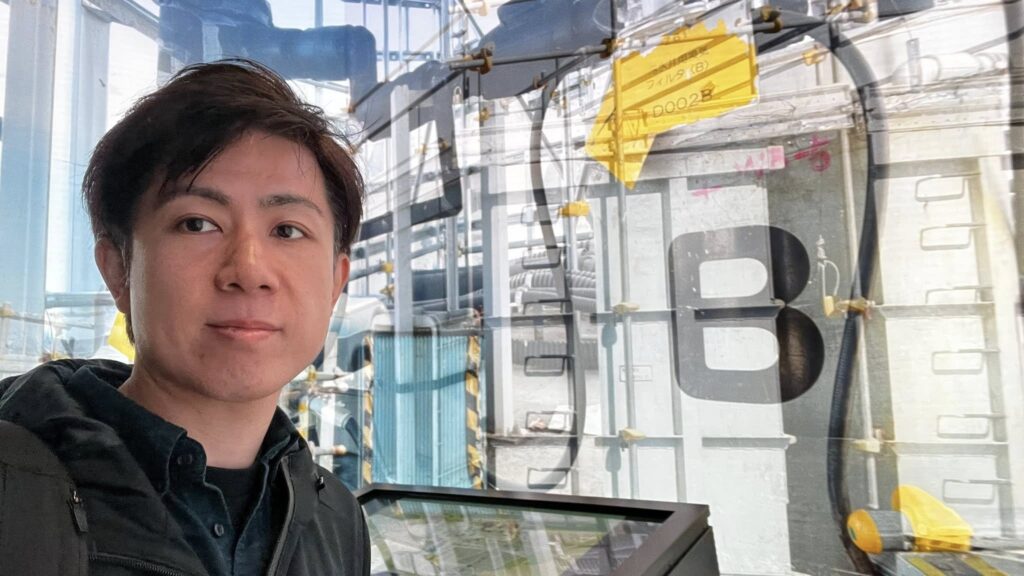
This is why, through this visit, we reaffirmed that Fukushima Daiichi is not a closed chapter, but an ongoing site of learning from failure.
As a company engaged in disaster prevention, crisis management, and resilience, SAKIGAKE JAPAN places importance on:
- Understanding failures as structural issues, not isolated events
- Confronting gaps between technology, operations, systems, and real-world conditions
- Learning directly from primary, on-site sources
The knowledge being accumulated in Fukushima is invaluable not only for Japan, but for infrastructure, disaster management, and energy systems worldwide. We will continue to engage with this “living site of learning” to help build a society that does not repeat the same mistakes.
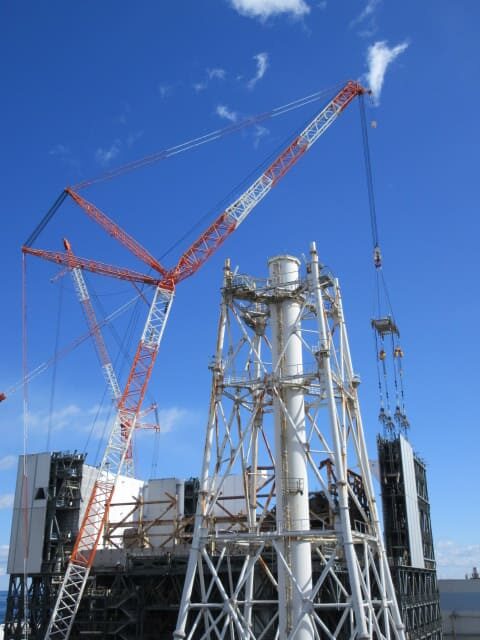
Note: Photography within the site is restricted. Images shown were taken at a museum approximately 10 km south of the plant, with special permission.
Gaia Vision — Making Disaster Risk Visible Before It Happens
One initiative that embodies this “learning from failure” perspective in practical form is Gaia Vision’s climate and disaster risk analysis solutions, Climate Vision and Water Vision.
These solutions visualize risks arising from climate change—such as flooding, heavy rainfall, storm surges, and landslides—by integrating data on terrain, land use, infrastructure, and population distribution. Rather than simply indicating “where danger exists,” they aim to reveal which functions may fail and how impacts may cascade when disasters occur.
As demonstrated by the Fukushima Daiichi accident, disasters rarely result from a single cause. They emerge when multiple risks overlap. Gaia Vision makes these compound risks visible in advance, providing a foundation for better decision-making across disaster prevention, BCP planning, urban development, and infrastructure design.
By transforming invisible risks into shared, actionable knowledge, such tools play a vital role in building resilience before the next crisis strikes.