

 SAKIGAKE管理人
 “No one expected it to strike twice.”
This year marks ten years since the Kumamoto Earthquake struck on April 14 and 16, 2016. The disaster claimed 276 lives, forced a maximum of 180,000 people to evacuate, and caused immense human and material damage — while also prompting a fundamental reassessment of the trust that Japanese society had long placed in its seismic standards.
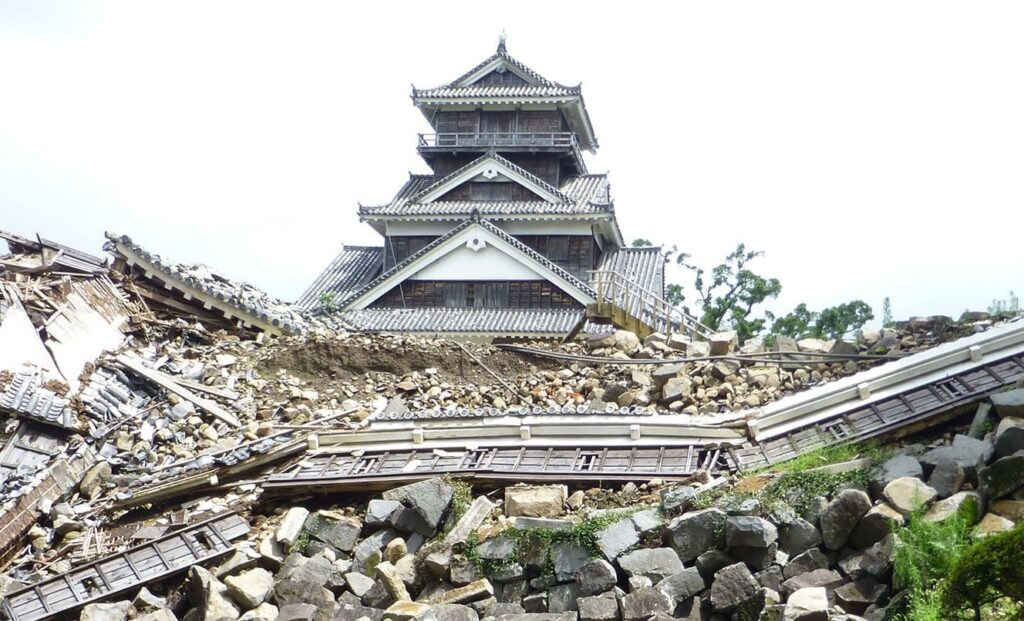
“My house is new, so we’ll be fine.” “We meet the building codes, so we’re safe.” For many who held these beliefs, two consecutive earthquakes registering the maximum intensity of 7 forced a rethinking of those assumptions. Here, we revisit the lessons that the Kumamoto Earthquake left behind.
An Unprecedented Double Seismic Intensity 7 — And the Damage No One Anticipated
At 9:26 PM on April 14, 2016, a seismic intensity 7 tremor struck Mashiki Town in Kumamoto Prefecture. The Japan Meteorological Agency classified this as a “foreshock,” though its scale was large enough to qualify as a major earthquake on its own.
Then, 28 hours later at 1:25 AM on April 16, an even larger mainshock of magnitude 7.3 struck directly. Mashiki Town recorded seismic intensity 7 for a second time — an occurrence unprecedented in Japan’s observational history. Aftershocks continued for months, exceeding 4,000 tremors of intensity 1 or higher over the following half-year, keeping residents under sustained stress for an extended period.
“New Buildings Are Safe” — The Limits Made Clear
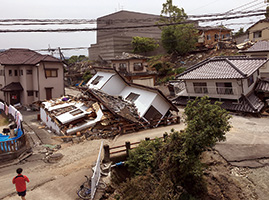
Japan’s Building Standards Act was revised in 2000 in the wake of the Great Hanshin-Awaji Earthquake, strengthening requirements for connector hardware at structural joints and for the placement of load-bearing walls. However, the surveys conducted after the Kumamoto Earthquake revealed that even buildings complying with this “2000 Standard” suffered damage to a notable extent.
A comprehensive survey of central Mashiki Town conducted by the Architectural Institute of Japan showed a clear correlation between construction era and collapse rate:
● Pre-1981 (old seismic standard): collapse rate 28.2%
● 1981–2000 (new seismic standard, pre-2000 revision): collapse rate 8.7%
● Post-2000 standard (equivalent to Grade 1): collapse rate 2.2%
● Seismic Grade 2 (1.25× the standard): collapse cases confirmed
● Seismic Grade 3 (1.5× the standard): zero collapses; 87.5% suffered no damage
Particularly noteworthy is that collapse cases were confirmed even among Grade 2 buildings — a category long described as “essentially collapse-proof.” The root cause lies in the design premise of the seismic standards themselves. Existing standards were designed with the goal of preventing collapse in a single major earthquake; repeated strong shaking within a short period was simply outside the assumed scenario. Cases in which buildings that had accumulated structural damage during the foreshock then collapsed under the mainshock were widespread. Research from Kyoto University has also shown that the maximum displacement of a building subjected to both foreshock and mainshock can exceed twice that caused by the mainshock alone.
It was also found that many collapsed buildings — even those that met the design specifications on paper — had insufficiently precise construction of connector joints. This highlighted the additional challenge that compliance with standards and actual seismic performance do not always align.
From “Withstanding” to “Minimizing Damage”
In response to these lessons, interest in “seismic control” (seishin) as a complement to conventional “seismic resistance” (taishin) has grown across the construction and disaster prevention sectors. While seismic resistance works by stiffening a building’s structure to endure shaking, seismic control uses damper devices to absorb and dissipate the energy of tremors, suppressing the accumulation of damage itself. Against the backdrop of consecutive earthquakes, the field increasingly recognizes that meeting grade requirements alone is insufficient — the ability to minimize damage at each tremor is now seen as an essential consideration in future structural design.
The Blind Spot in Business Continuity Plans (BCP)
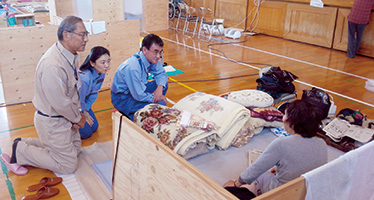
The lessons of the Kumamoto Earthquake extend beyond individual housing to raise important questions for the BCPs of businesses and local governments. The assumption that “our facilities are built to the new seismic standard, so we’re safe” provides only a guarantee of minimum durability against a single major earthquake. If a building becomes unusable — even without collapsing — operations will cease. It is essential to incorporate into BCPs a scenario-planning process that accounts for consecutive earthquakes, as well as provisions for securing alternative operating locations.
A Practical Option for Seismic Retrofitting — Aster Power Coating
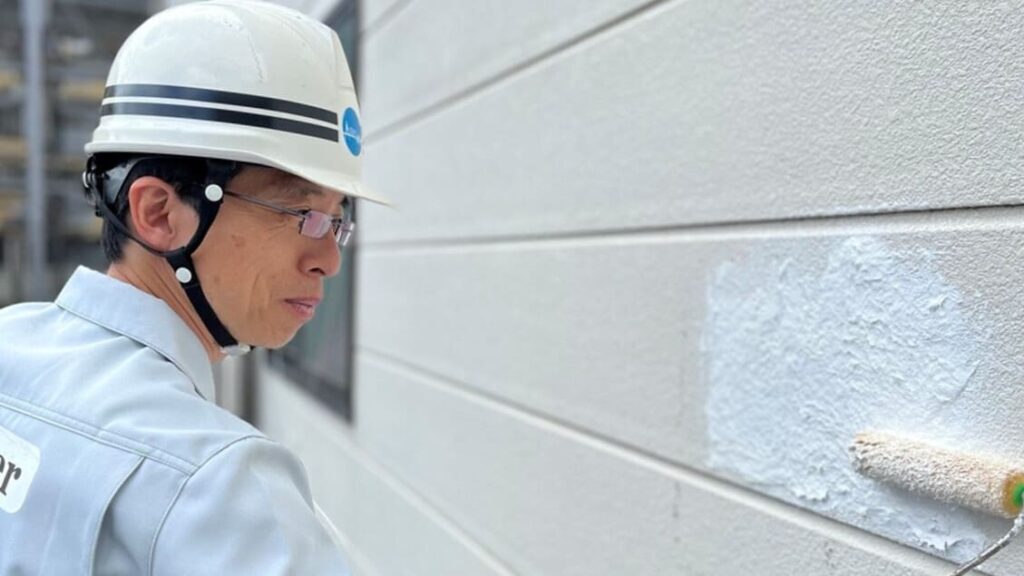
For organizations that have hesitated to begin seismic retrofitting, one practical option worth considering is Aster Power Coating, developed by our partner Aster Co., Ltd. Created by a startup originating from the University of Tokyo’s Institute of Industrial Science, this fiber-reinforced specialty coating can enhance a building’s seismic resistance and durability simply by being applied, at approximately one-fifteenth the cost of conventional large-scale structural renovation. It has been adopted in domestic applications including apartment building exteriors and railway viaducts, as well as public school construction in the Philippines and at a UNESCO World Heritage Site in Nepal.
In Closing — Preparedness Beyond “Meeting the Standard”
What the Kumamoto Earthquake demonstrated is this: meeting the minimum requirements set by law and being safe across all possible earthquake scenarios are not the same thing. At this ten-year milestone, we invite you to take a fresh look at your building’s seismic grade and the practical effectiveness of your BCP.
For inquiries about disaster prevention products or BCP support, please feel free to contact SAKIGAKE JAPAN.
▶ Contact: https://sakigakejp.com/en/contact-en/
▶ Aster Power Coating details: https://sakigakejp.com/en/sales/aster-power-coating-2/