
 SAKIGAKE管理人
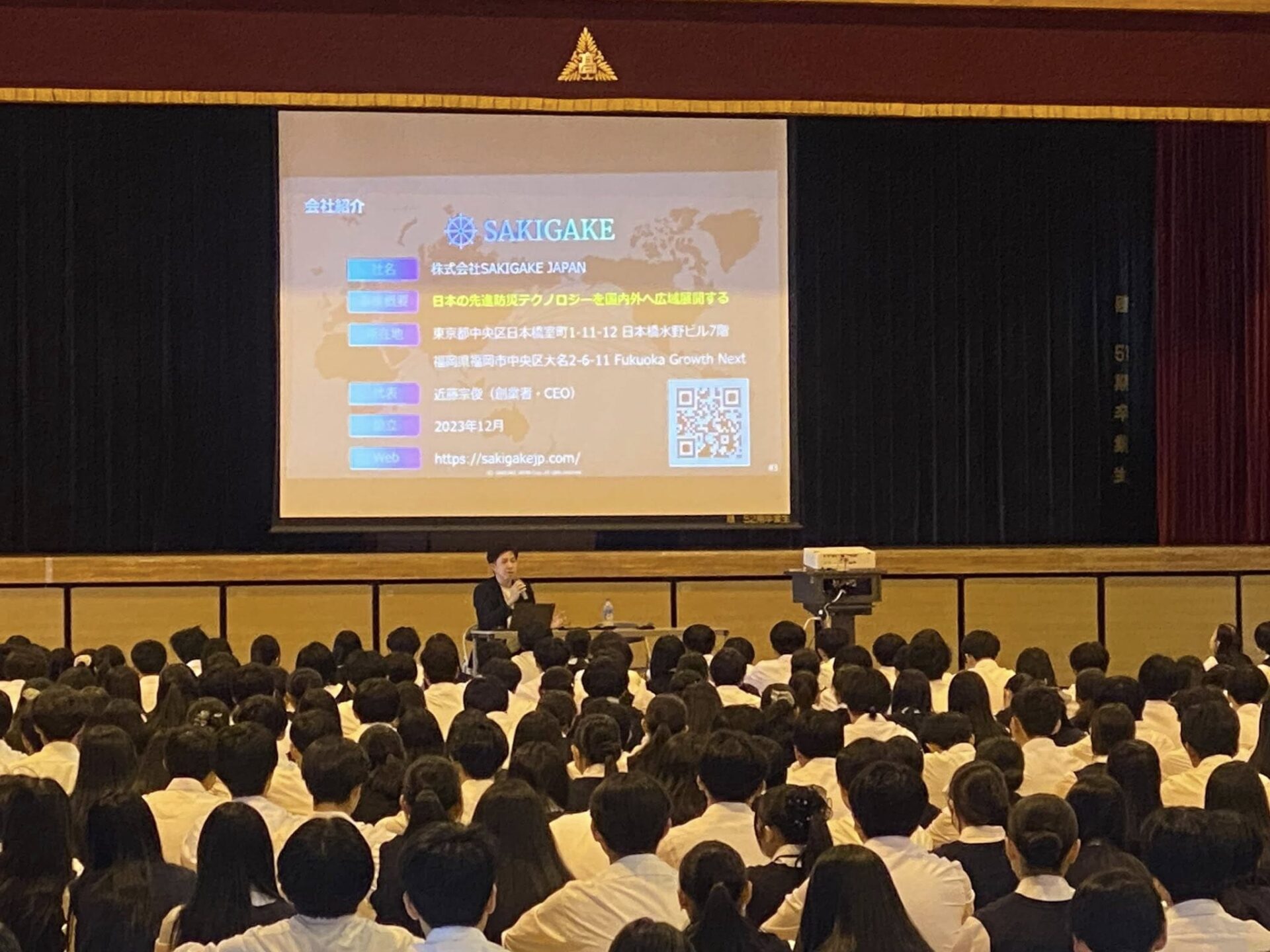
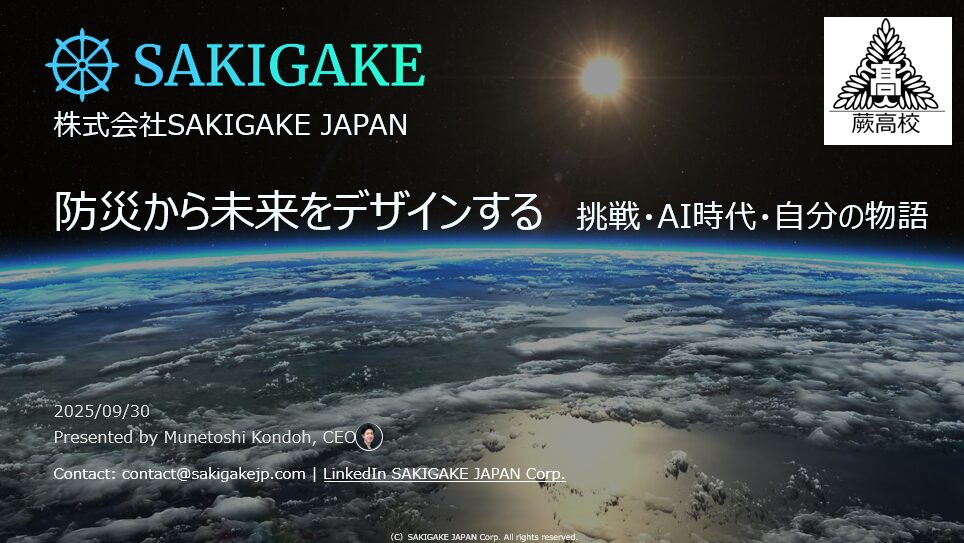
 On September 30, 2025, Munetoshi Kondo, CEO of SAKIGAKE JAPAN, delivered a special lecture at Saitama Prefectural Warabi High School under the theme “Designing the Future from Disaster Preparedness.”
Held immediately after the school’s evacuation drill, the session went beyond the basics of disaster prevention—inviting students to reflect on career development, social challenges, and the skills needed in the age of AI.
Japan’s Disaster Management Expertise and Global Contribution
In the first half of the lecture, Kondo explained how Japan, as one of the world’s most disaster-prone nations, has developed advanced disaster prevention technologies through repeated experiences with earthquakes, heavy rains, and other natural hazards.
I introduced specific examples of Japanese innovations that have contributed to global disaster resilience, referencing both major disasters since 2011 and the Sendai Framework for Disaster Risk Reduction, an international framework through which Japan’s expertise continues to play a vital role worldwide.
Reflecting on my own career, I shared the path that led me to found SAKIGAKE JAPAN—a journey that included experiences at Tochiku High School, Hiroshima University, The University of Tokyo Graduate School, and the University of California, San Diego. My early involvement in research, new business creation at Recruit, and exposure to global issues made him realize that Japan’s disaster and environmental technologies could make a meaningful contribution to the world.
Social Challenges as “Seeds of Future Value”
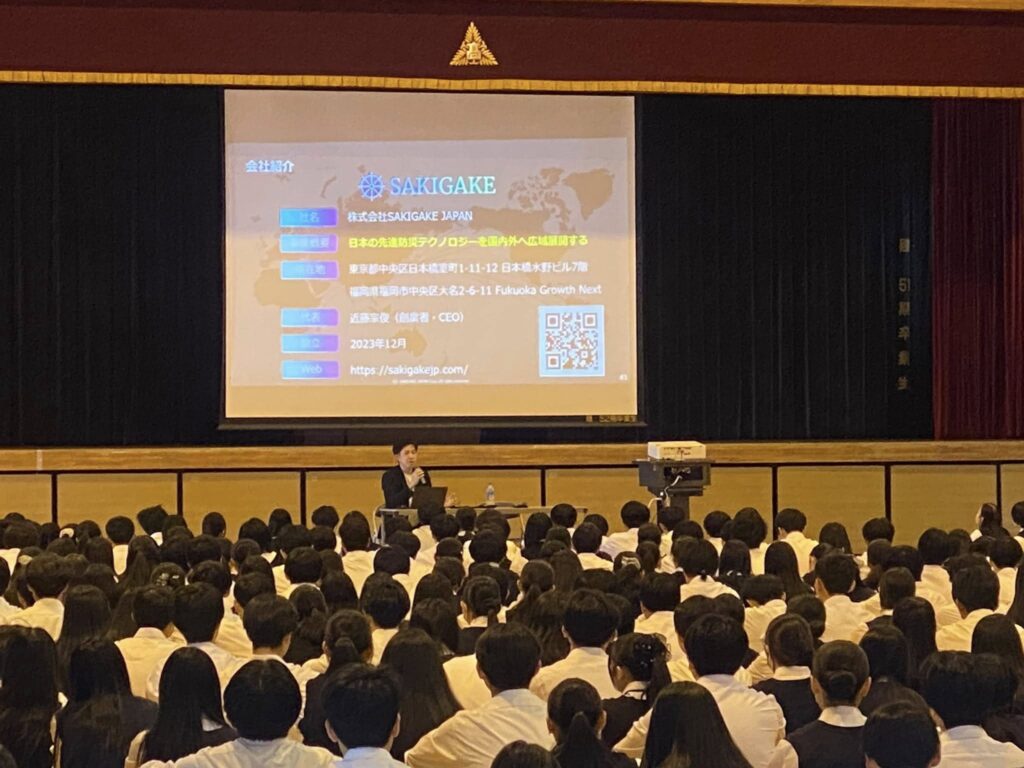
In the middle section, I emphasized that social issues are sources of new value creation, using the SDGs as a framework.
I explained that fields such as disaster management, environmental protection, and education will continue to grow in importance, and that unmet needs in developing regions represent untapped opportunities for innovation.
Turning to local disaster awareness, I discussed the Arakawa River basin, where Warabi High School is located, and introduced the city’s flood hazard map, encouraging students to understand regional risks and prepare their own disaster response plans.
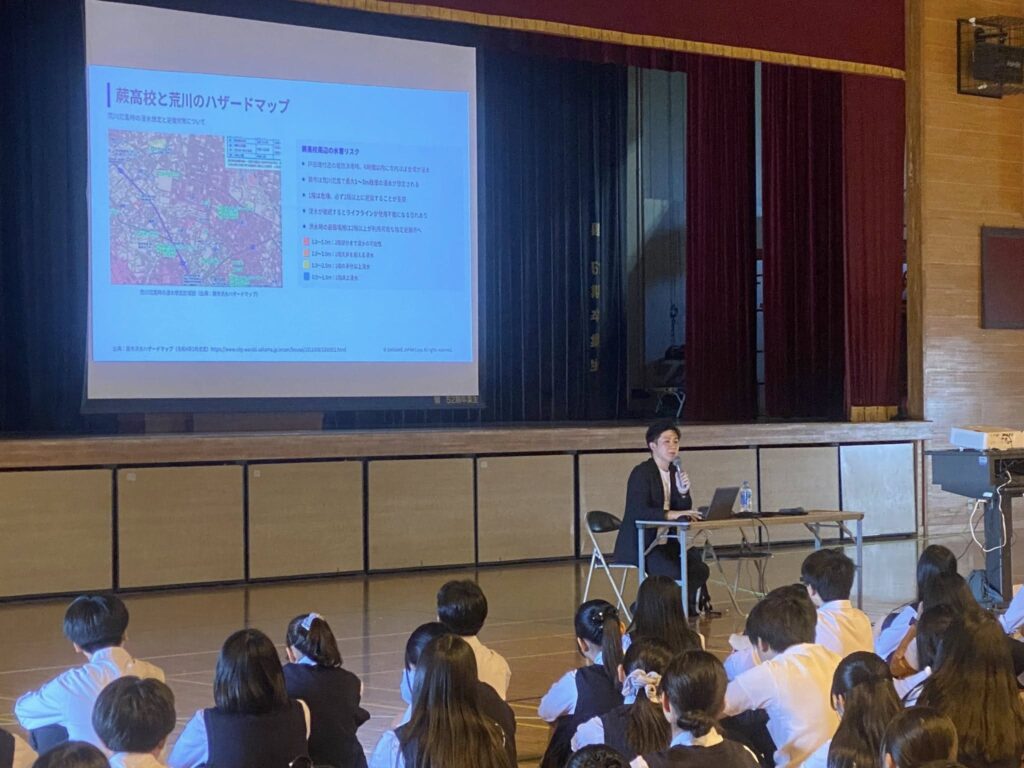
📍 Reference: Warabi City Flood Hazard Map
https://www.city.warabi.saitama.jp/anzen/bousai/1011068/1000952.html
Living in the Age of AI — Reflections from Students
In the final part, I discussed the qualities that will define human value in the age of AI.
I proposed three essential perspectives:
- Story – understanding one’s personal narrative
- Values – having a clear sense of what matters
- Self-efficacy – the confidence to take action
I stressed that the more technology advances, the more we must return to what makes us human.
Feedback from students highlighted strong engagement and curiosity:
“It made me think deeply about my career path.”
“I learned to see disaster prevention from a new angle.”
“The discussion about values in the AI era was eye-opening.”
Their thoughtful questions and enthusiasm reflected a high level of awareness and motivation toward both disaster resilience and their futures.
Continuing to Design the Future from Disaster Preparedness
I concluded by expressing his hope that this lecture would inspire students to think about how they can design their own futures.
SAKIGAKE JAPAN will continue to collaborate with educational institutions, local governments, and private companies under the vision of “Designing the Future from Disaster Preparedness,” contributing to the next generation’s learning and to a more resilient society.
📩 For inquiries regarding lectures, workshops, or disaster education programs, please contact us via:
▶ [Inquiry Form]