
 SAKIGAKE管理人
 Lessons from a “Compound Disaster” Where Earthquake, Tsunami, and Nuclear Accident Occurred in Sequence
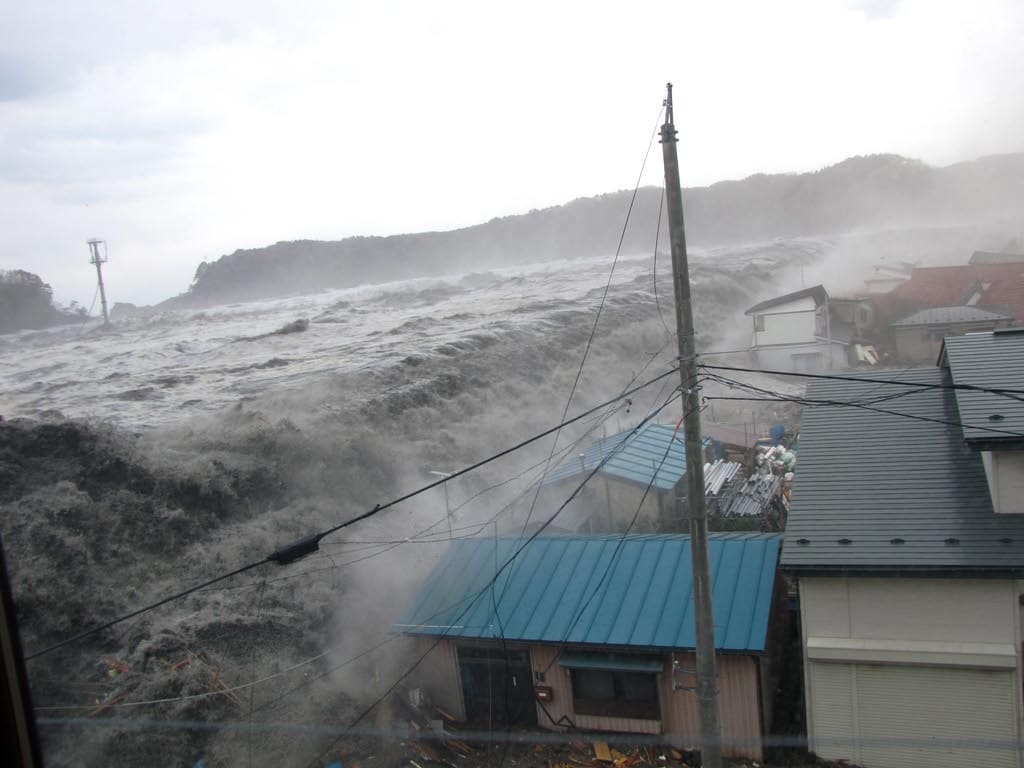
On March 11, 2026, it will mark 15 years since the Great East Japan Earthquake. At 14:46 on March 11, 2011, a massive earthquake with a magnitude of 9.0 struck off the coast of Sanriku. This was the largest earthquake ever recorded in Japan’s history and triggered a massive tsunami, which subsequently led to the accident at the Fukushima Daiichi Nuclear Power Plant.
The essence of this disaster was not simply that it was a massive earthquake. Rather, it was a compound disaster, in which an earthquake, tsunami, and nuclear accident occurred in sequence. The Great East Japan Earthquake confronted the world with a new reality: disasters do not occur in isolation.
https://www.bousai.go.jp/kohou/kouhoubousai/h23/63/special_01.html
Scale and Damage of the Great East Japan Earthquake
As a result of this earthquake:
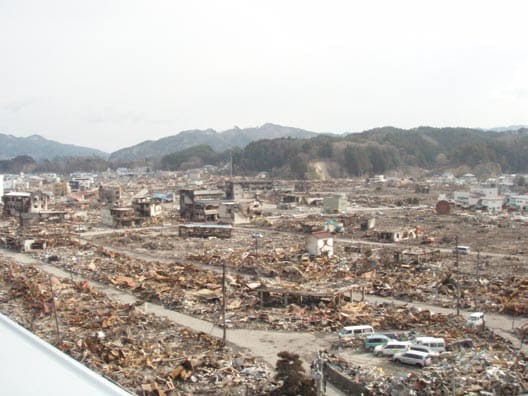
- Maximum seismic intensity 7 (Kurihara City, Miyagi Prefecture)
- Maximum tsunami run-up height approximately 40.5 meters (Miyako City, Iwate Prefecture)
- 15,900 deaths
- 2,520 missing persons
- Approximately 6,200 injured
- Approximately 400,000 homes damaged (*)
These figures illustrate the immense scale of destruction. However, the defining characteristic of this disaster was not only the scale of damage. After the main earthquake, a massive tsunami occurred, which then led to the accident at the Fukushima Daiichi Nuclear Power Plant.
(*) Source: Fire and Disaster Management Agency, Ministry of Internal Affairs and Communications, “Damage Situation of the Great East Japan Earthquake (Final Report)”
The Reality of a “Compound Disaster”
The Great East Japan Earthquake became a typical example of a compound disaster, where multiple disasters occur in sequence.
First, a massive earthquake occurred. The seismic movement caused significant displacement of the seabed, generating a massive tsunami. The tsunami struck a wide stretch of the Tohoku coastline, devastating numerous cities and communities.
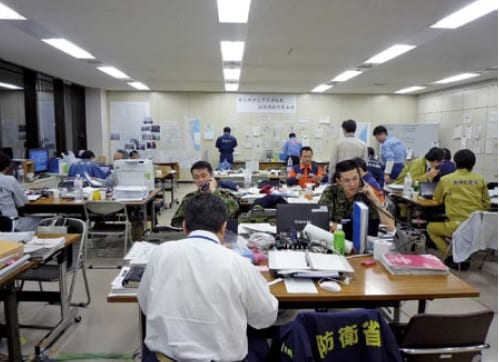
The tsunami then struck the Fukushima Daiichi Nuclear Power Plant, triggering a nuclear accident. The tsunami reached heights of approximately 14–15 meters, far exceeding the plant’s seawall height of about 5–6 meters (*).
(*) Source: National Diet of Japan Fukushima Nuclear Accident Independent Investigation Commission
As a result:
- Emergency diesel generators were flooded
- Station blackout occurred
- Cooling functions stopped
Subsequently:
- Unit 1: Hydrogen explosion on March 12, 2011
- Unit 3: Hydrogen explosion on March 14, 2011
- Unit 4: Building damage on March 15, 2011
These events led to reactor core meltdowns.
As a consequence of the accident:
- Approximately 160,000 people were evacuated
- The accident was rated INES Level 7, the same level as the Chernobyl disaster
- Decommissioning is expected to take 30–40 years
In other words, the Great East Japan Earthquake involved three cascading disasters:
Earthquake disaster
→ Tsunami disaster
→ Nuclear disaster
This made it an extremely significant compound disaster.
https://www.bousai.go.jp/kohou/kouhoubousai/h23/63/special_01.html
Impact of the Fukushima Daiichi Nuclear Accident
The Fukushima Daiichi nuclear accident had a profound impact not only on Japan but also on global energy policy and disaster preparedness. At the time of the accident, reactors Units 1–3 experienced core meltdowns, releasing large quantities of radioactive materials into the environment. The Japanese government issued evacuation orders for areas within a 20 km radius of the plant, ultimately forcing approximately 160,000 people to evacuate (*).
(*) Source: Reconstruction Agency, “Current Status of Reconstruction and Revitalization in Fukushima”
The impact of the accident has been long-lasting.
- Decommissioning expected to take 30–40 years (1)*
- Approximately 10,000 km² designated for decontamination (2)*
The nuclear accident caused by the Great East Japan Earthquake demonstrated to the world the risks posed when energy infrastructure and natural disasters interact.
(1*) Source: “TEPCO Fukushima Daiichi Nuclear Power Plant Decommissioning Roadmap”
(2*) Source: Ministry of the Environment, “Decontamination Information Site”
The Risk of “Compound Disasters” Learned by the World
Previously, disaster prevention focused primarily on individual risk management, such as:
- Earthquake countermeasures
- Tsunami countermeasures
- Nuclear safety
However, the Great East Japan Earthquake demonstrated that multiple disasters can occur simultaneously or sequentially.
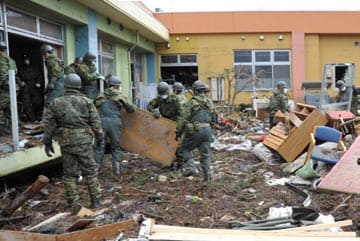
As a result, many countries have implemented new safety approaches, including:
- Reviewing safety standards for nuclear facilities
- Introducing multiple backup power systems
- Enhancing redundancy in critical infrastructure
- Reassessing tsunami hazard assumptions
These measures reflect a shift toward risk management based on compound disasters.
https://www.bousai.go.jp/kohou/kouhoubousai/h23/63/special_01.html
Disaster Preparedness in the Era of Compound Disasters
Due to climate change and urbanization, modern disasters increasingly arise from multiple overlapping causes rather than a single trigger.
Examples include:
- Earthquake + urban fires
- Heavy rainfall + landslides
- Power outages + communication disruptions
- Flooding + urban infrastructure failure
In other words, disaster preparedness must evolve from individual hazard countermeasures toward comprehensive societal resilience design.
https://www.bousai.go.jp/kohou/kouhoubousai/h23/63/special_01.html
The Greatest Lesson of the Great East Japan Earthquake
The Great East Japan Earthquake was not merely a massive disaster. It symbolized the beginning of an era in which disasters occur in cascading chains.
Earthquakes, tsunamis, and nuclear accidents are each devastating on their own. However, in 2011 they occurred sequentially, revealing the vulnerabilities of society and infrastructure all at once. A massive earthquake triggered a tsunami, and that tsunami disabled the power systems of a nuclear power plant, leading to a nuclear accident. This chain of events exposed the limitations of disaster preparedness that had been designed under the assumption of single hazards.
The lesson of the Great East Japan Earthquake is that disasters must not be considered in isolation. Instead, they must be addressed as compound disasters, where multiple risks interact and amplify one another.
Fifteen years after the disaster, one of its most important lessons is that it forced society to recognize the reality that disasters rarely occur alone.
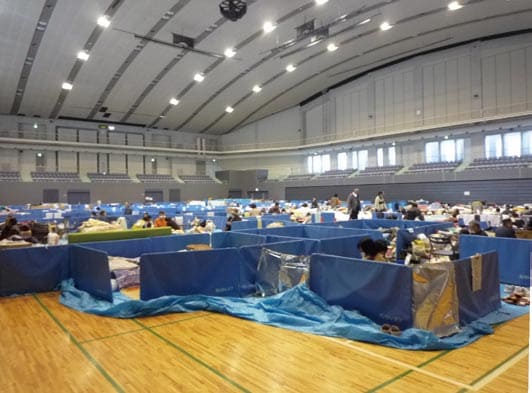
https://www.bousai.go.jp/kohou/kouhoubousai/h23/63/special_01.html
Conclusion | Lessons from the Great East Japan Earthquake After 15 Years
Fifteen years have passed since the Great East Japan Earthquake. As time passes, memories of the disaster and the tension of that moment gradually fade. However, disasters themselves are never merely events of the past.
Japan continues to face the possibility of major disasters such as the Nankai Trough mega-earthquake and a Tokyo metropolitan earthquake. In addition, the risks of heavy rainfall, floods, and landslides are increasing due to climate change. Because modern society is highly dependent on complex infrastructure, a single disaster can disrupt the functioning of society as a whole.
Therefore, it is crucial not only to look back on disasters as historical events but also to consider how their lessons can be applied to current disaster preparedness and societal design. The experience of the Great East Japan Earthquake represents an invaluable lesson not only for Japan but for the world.
Passing these lessons on to future generations and strengthening the resilience of society as a whole may be one of the most important challenges we face as we mark 15 years since the disaster.