
 SAKIGAKE管理人
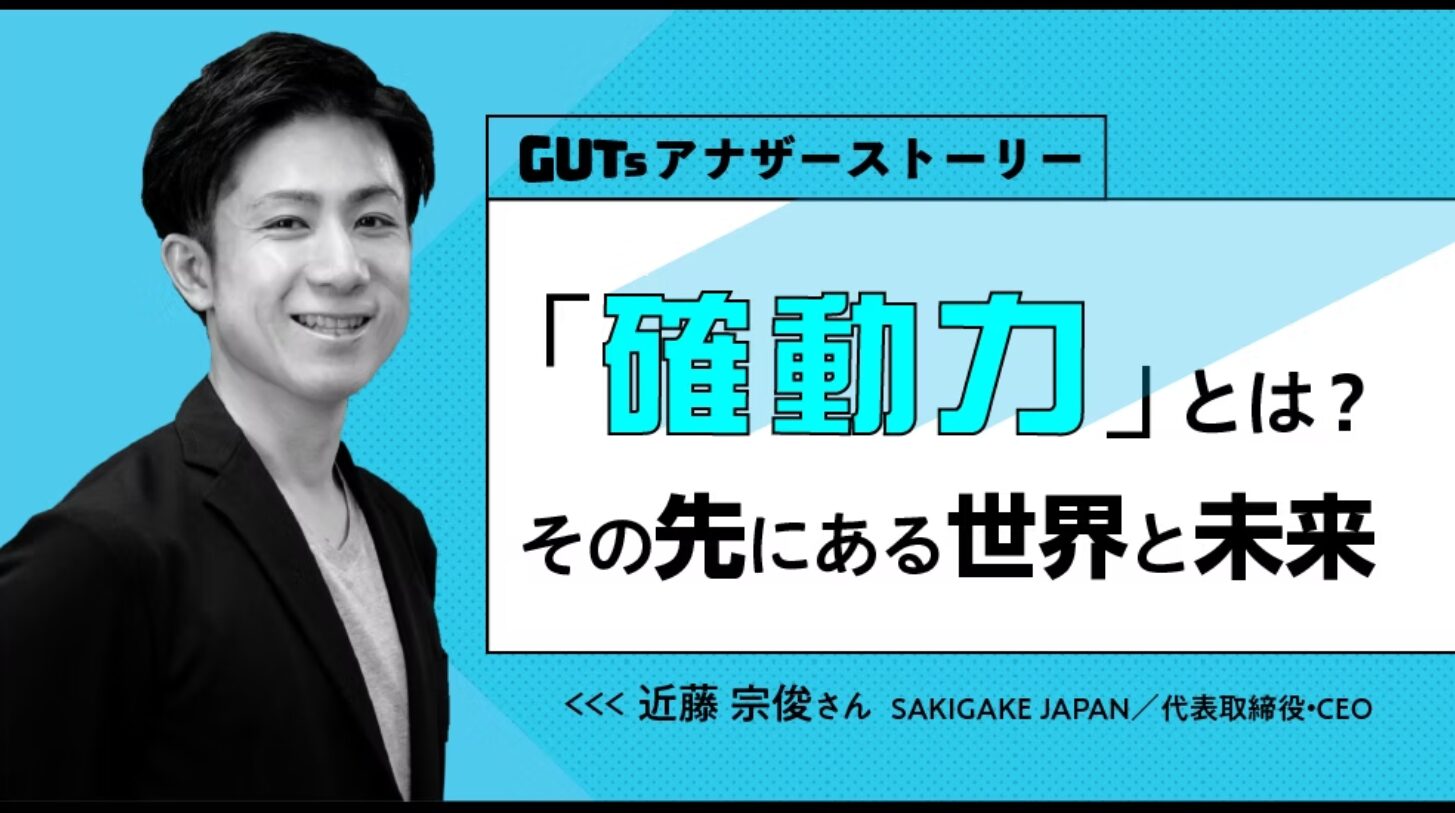
 We are pleased to announce that Munetoshi Kondo, Representative Director & CEO of SAKIGAKE JAPAN Co., Ltd., was recently interviewed by terra°ce lab, a media platform operated by CTE Co., Ltd.
▼ Read the full interview here

In the interview, Kondo discusses how Japanese disaster prevention technologies are evaluated internationally, how AI and data utilization are transforming the disaster management field, and what is required to establish disaster resilience as a sustainable industry.
Rather than simply introducing disaster countermeasures, the conversation redefines disaster prevention as a resilience industry, emphasizing the importance of integrating it into society through data structuring, standardization, and networking. While “Disaster Prevention × AI” may appear to be a new trend, Mr. Kondo stresses that what truly matters is not the technology itself, but how it is implemented within social systems.
In this article, we would like to introduce our core philosophy of “Kakudoryoku” (the power of decisive action) and the perspective of phase-free disaster prevention, both of which are central to our approach to social implementation.
Media Coverage Overview | Disaster Prevention in the AI Era
During the interview, the following topics were discussed:
- The global reputation of Japanese disaster prevention technologies
- The potential of AI and data utilization in the resilience sector
- Strategies for establishing disaster prevention as a viable and sustainable business
- The management philosophy of “Kakudoryoku”
The focus was not merely on disaster preparedness itself, but on building a business strategy that enables disaster resilience to be implemented effectively within society.
What is Kakudoryoku? | The Driving Force Behind Social Implementation
“Kakudoryoku” refers to:
The ability to take action without stopping at planning—acting, learning, refining, and continuing to move forward.
The fields of disaster prevention and resilience require caution and careful planning. However, without real-world verification and implementation, progress cannot be achieved.
- Standardization of disaster response
- Data integration and visualization
- Cross-regional networking
These cannot be realized through discussion alone. They require continuous testing and improvement in real-world settings. Kakudoryoku represents the execution philosophy that transforms disaster prevention from a “concept” into a functioning social mechanism.
What is Phase-Free Disaster Prevention? | Bridging Everyday Life and Emergencies
One of the major challenges in disaster prevention is that measures are often designed exclusively for emergencies.
- They are not used in normal times
- They may not function effectively when needed
- Investment decisions are frequently postponed
The concept that addresses these issues is phase-free disaster prevention.
Phase-free means:
Systems and technologies that provide value in everyday life and continue to function during emergencies.
SAKIGAKE JAPAN applies this principle to product development, business design, and international expansion. By embedding disaster resilience into daily life rather than treating it as a special preparation, we create the foundation for a sustainable and resilient society.
▼ Related Article


Disaster Prevention × AI | The Future Direction of the Resilience Industry
With advances in AI and data technologies, disaster prevention is entering a new phase:
- Digitization of stockpile management
- Real-time tracking of human movement during disasters
- Advanced damage forecasting
- Risk visualization and analytics
However, technology alone does not change society.
The critical questions are:
- What are we trying to achieve?
- How will it be implemented within social systems?
The true issue is not simply adopting AI, but designing resilience models that effectively leverage AI. Kakudoryoku serves as the execution principle that prevents Disaster Prevention × AI from becoming a temporary technological trend, instead guiding it toward sustainable social implementation.
Bringing Japanese Disaster Resilience to the World
Japan is one of the most disaster-prone countries in the world, yet it has accumulated extensive expertise and operational knowledge in disaster resilience. Japan’s involvement in international standards and the high regard it receives abroad are evidence of this.
However, this value has not yet fully reached the global stage.
SAKIGAKE JAPAN does not merely export Japanese technology. Instead, we adapt and redesign it to align with each country’s institutions, culture, and infrastructure conditions. Disaster prevention is not simply aid—it is the construction of sustainable social infrastructure.
Through international collaboration, we aim to evolve Japan-originated resilience models into systems that function globally.
▼ Related Article

Making Disaster Prevention Natural
Disaster prevention does not need to be extraordinary.
- Prepare as an extension of daily life
- Ensure that everyday systems function during emergencies
- Create reproducibility through data and standardization
These incremental efforts strengthen social resilience.
With Kakudoryoku as our core principle, SAKIGAKE JAPAN will continue advancing disaster prevention from philosophy to implementation.
Conclusion | The Future of Disaster Resilience Depends on Implementation
This interview provided an opportunity to connect the following themes into a single narrative:
- Disaster prevention
- Kakudoryoku
- Phase-free design
- Resilience in the AI era
It is not enough to talk about disaster prevention.
It must function.
SAKIGAKE JAPAN will continue contributing to a sustainable future through the social implementation of disaster resilience.