
 SAKIGAKE管理人
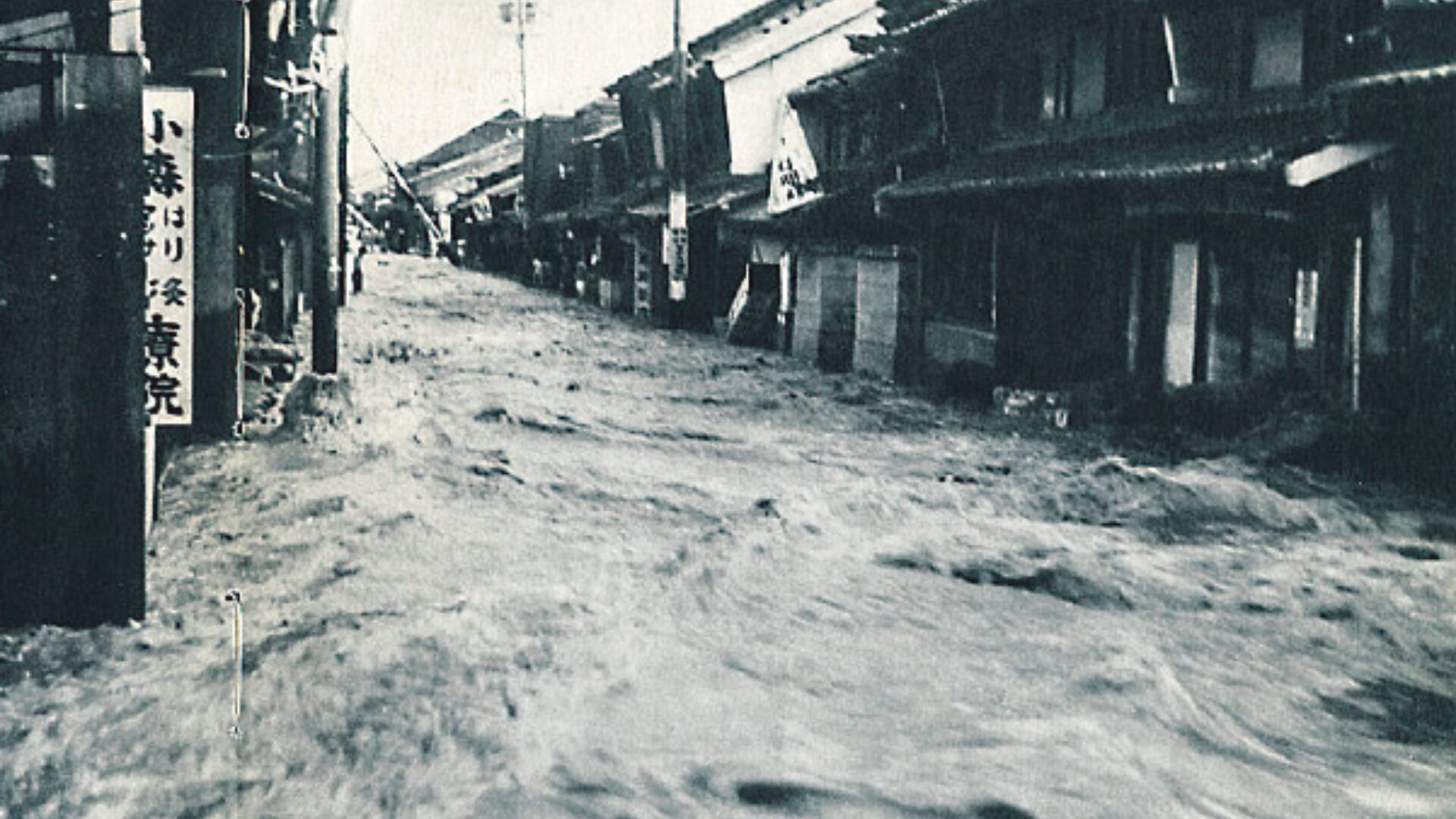
 On September 26, 1959, Typhoon No. 15, known as the Ise Bay Typhoon, struck the Tokai region, leaving 5,098 people dead or missing—the worst toll ever recorded in Japan’s meteorological history. Centered on Nagoya, the disaster caused extensive storm surges, violent winds, and widespread flooding, and remains etched in Japan’s history as an unprecedented natural calamity.
Sixty-five years later, we must regard this “worst typhoon disaster in Japan” not simply as a historical event, but as knowledge to be reinterpreted as future preparedness in the era of climate change.
https://www.bousai.go.jp/kaigirep/hakusho/h21/bousai2009/html/ph/ph001.htm
Why Did the Ise Bay Typhoon Cause Such Severe Damage?
With a central pressure of 929 hPa, the Ise Bay Typhoon made landfall on the Kii Peninsula at extraordinary strength. Along the Ise Bay coast, a storm surge reaching 3.45 meters overwhelmed embankments, leading to repeated levee breaches and extensive inundation of urban areas.
The following factors exacerbated the scale of the disaster:
- Limited forecast accuracy and information transmission: Residents were unable to evacuate in time.
- Fragile coastal and river embankments: Flood defenses failed against the massive storm surge.
- Insufficient evacuation systems: Local governments lacked effective guidance and communication structures.
- Urbanization and topography: Densely populated lowlands suffered catastrophic flooding.
These shortcomings triggered a fundamental shift in Japan’s disaster management system.
A “Revolution” in Disaster Policy — Enactment of the Disaster Countermeasures Basic Act
The lessons of the Ise Bay Typhoon directly led to the enactment of the Disaster Countermeasures Basic Act in 1961.
This law established, for the first time, a comprehensive and systematic framework for disaster management, bringing together the national government, local governments, citizens, and businesses in coordinated efforts. It became the foundation of Japan’s modern disaster policy.
Subsequent reforms included improvements in weather forecasting by the Japan Meteorological Agency, development of coastal and river defenses, and the evolution of evacuation advisory systems—all of which underpin today’s disaster preparedness in Japan.
If the Ise Bay Typhoon Happened “Today” — Risks in the Climate Change Era
Since the pre-industrial era, the global average temperature has already risen by about 1.2°C. Global warming is driving the emergence of “super typhoons,” characterized by greater rainfall and stronger winds.
If a disaster of the Ise Bay Typhoon’s magnitude were to occur today, the risks would include:
- Increased rainfall and wind speeds causing urban flooding
- Larger-scale inundation from the combined effects of sea level rise and storm surges
- Compound disasters exacerbated by urban heat island effects
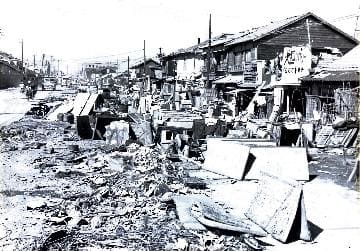
According to simulations by Japan’s Ministry of Land, Infrastructure, Transport and Tourism, large-scale flooding could once again occur in present-day Nagoya. Past disasters must not only be remembered as history but also used as scenarios to anticipate future crises.
https://www.city.nagoya.jp/shobo/page/0000153621.html
The Role of Companies in “Climate-Adaptive Disaster Preparedness”
In the age of climate crisis, disaster preparedness is no longer the responsibility of governments and infrastructure operators alone. Companies must strengthen their own resilience to ensure continuity and protect communities.
At SAKIGAKE JAPAN, we are advancing initiatives such as:
- Development and deployment of off-grid cold storage infrastructure to safeguard food supply during disasters
- BCP (Business Continuity Planning) support services, incorporating climate disaster scenarios
- Collaboration with municipalities on joint training programs and stockpiling plans
- AI-powered disaster prediction and visualization technologies
These efforts represent our pursuit of “anticipatory disaster preparedness”, forming a foundation for sustainable business operations in a changing climate.
Conclusion: From “Remembering” to “Leveraging”
The Ise Bay Typhoon brought about the worst human toll in Japan’s history, while also giving rise to the Disaster Countermeasures Basic Act, the cornerstone of modern disaster policy.
Yet with climate change progressing, disasters that exceed the “worst of the past” may become the norm.
This is why past disasters must not only be “remembered,” but actively “leveraged” as scientific and strategic knowledge for the future.
At SAKIGAKE JAPAN, we remain committed to collaborating with governments, businesses, and communities to build a more resilient and adaptive society.
📩 For inquiries on disaster and climate risk management, please contact us via the [Contact Form].
▶ Explore our product lineup: https://sakigakejp.com/products