
 SAKIGAKE管理人
 Introduction: The “Unexpected Isolation” That Occurred in the Genkai Sea
At 10:53 AM on March 20, 2005, a magnitude 7.0 earthquake struck off the northwestern coast of Fukuoka Prefecture, shattering a quiet Sunday morning. The quake recorded a maximum seismic intensity of 6-lower in central Fukuoka City. This disaster, known as the Fukuoka Earthquake, overturned long-held assumptions about seismic safety in northern Kyushu. While it exposed vulnerabilities in urban areas, it also revealed a critical and often overlooked issue:
the risk of complete isolation in remote communities such as islands and mountainous regions.
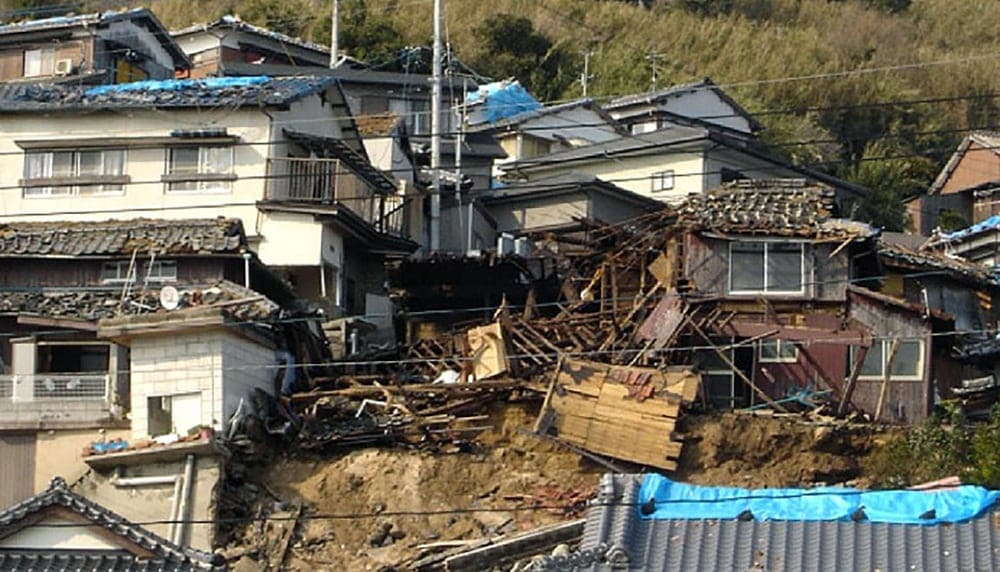
Genkai Island, located closest to the epicenter in the Genkai Sea, suffered catastrophic damage, with approximately 50% of its homes completely destroyed. However, the true impact extended far beyond structural damage. The destruction of port facilities and the suspension of ferry services—the island’s only transportation link—instantly transformed the island into an “access-denied zone” cut off from external support. Despite being only 8 kilometers from the mainland and visible to the naked eye, the island became unreachable.
This phenomenon—“isolation despite proximity”—has since been redefined as a critical risk, especially in light of recent disasters such as the Noto Peninsula Earthquake. It is now recognized as a top-priority issue for municipalities and businesses across Japan.
Overview of the Fukuoka Earthquake
The 2005 earthquake forced Japan to re-evaluate seismic risks in regions previously considered stable.
Basic Data
- Date & Time: March 20, 2005, 10:53 AM
- Epicenter: Offshore Fukuoka (Genkai Sea)
- Magnitude: 7.0 (Japan Meteorological Agency)
- Depth: Approx. 9 km (shallow-focus earthquake)
- Maximum Intensity: 6-lower (Fukuoka City and surrounding areas)
- Type: Strike-slip fault (extension of the Kego Fault)
Overall Damage
- Fatalities: 1
- Injured: Over 1,200
- Housing Damage:
- Completely destroyed: ~140 units
- Half-damaged: ~350 units
- Partially damaged: over 9,000 units
- Urban Impact:
- Falling exterior walls and glass in downtown Fukuoka
- Suspension of public transportation
- Liquefaction observed
Notable Impact Area: Genkai Island
- Approximately 50% of homes destroyed
- Severe slope failures triggered by strong shaking
- Immediate physical isolation due to port damage
- Nearly all residents (~700 people) evacuated to the mainland
Chapter 1: The Structure of Isolation — Why Rescue Does Not Arrive
From a disaster management perspective, “isolation” is not merely geographical. It is a compound of three critical breakdowns:
1. Physical Disconnection: Fragile Access Routes
Many remote regions rely on a single access route. On Genkai Island, it was the port. In the Noto Peninsula, it was a single arterial road. Once this route is disrupted, even the most advanced rescue teams cannot physically reach the area.
The assumption that “helicopters will solve the problem” often fails under conditions such as:
- Severe weather
- Nighttime operations
- Multiple simultaneous disasters
2. Informational Disconnection: The Danger of Information Scarcity
The greatest burden during isolation is the absence of information:
- How severe is the situation?
- Is there a tsunami risk?
- When will help arrive?
This uncertainty leads to panic, misjudgment, and psychological stress. On Genkai Island, residents were forced to initiate rescue efforts themselves, without knowing the situation on the mainland.
3. Collapse of Life Infrastructure: Domino Effect of Failures
Power outages, water supply disruption, and communication breakdown often occur simultaneously. Modern communities are not designed for self-sufficiency.
Within days, critical issues emerge:
- Sanitation breakdown (especially toilets)
- Shortage of medical supplies
These directly contribute to disaster-related deaths, particularly among the elderly.
▼ related article


Chapter 2: The Survival Timeline — The Reality of the “72-Hour Window”
Effective survival strategies in isolated areas must follow a time-based framework:
Phase 1: 0–6 Hours (Self-help and Mutual Aid)
Public assistance will not arrive during this period. On Genkai Island, residents rescued each other from collapsed homes.
The key determinant of survival:
- Pre-existing community relationships
- Functional local disaster organizations
Phase 2: 6–72 Hours (Resource Management and Discipline)
With no external communication, communities must manage limited resources:
- Water
- Food
- Fuel
This requires resource triage and strict discipline. Without it, internal breakdown occurs before external help arrives.
Phase 3: After 72 Hours (Decision for Collective Evacuation)
Genkai Island’s decision to conduct a full evacuation was a rational yet difficult choice.
The key question:
Who decides between preserving land and preserving lives?
Such decision-making frameworks must be established in advance within:
- Community disaster plans
- Corporate BCPs (Business Continuity Plans)

Chapter 3: Breaking Isolation Through Technology
Modern innovations are transforming isolation response:
1. Satellite Communication (Starlink)
As seen in the 2024 Noto Peninsula Earthquake, satellite internet enabled:
- Real-time communication
- Remote medical care
- Accurate damage reporting
“As long as information flows, people do not lose hope.”
▼ related article

2. Logistics Drones
Drones enable last-mile delivery to inaccessible areas:
- Essential medicines (e.g., insulin)
- Emergency food and sanitation supplies
They operate where helicopters cannot.
For more information about our portable refrigerators, click below

3. Autonomous Infrastructure Systems
Portable water recycling systems improve hygiene in evacuation shelters, preventing disease outbreaks even without external infrastructure.
Chapter 4: Strategic Recommendations
We propose three key actions:
1. Redesign Stockpiles for “100% Isolation”
Move beyond the standard “3-day supply.”
→ Aim for 10 days of full self-sufficiency
2. Multi-layered Communication Systems
- Satellite communication
- Disaster radio systems
- Amateur radio training
Redundancy is critical.
3. Development of Field Leaders
In isolation, local leadership becomes decisive.
Training must focus on:
- Resource prioritization
- Decision-making under uncertainty
For more information on the “Disaster Response Specialist” system, which allows you to request disaster response specialists, please see below

Chapter 5: True Resilience from Genkai Island
Genkai Island rebuilt rapidly, completing reconstruction by 2008.
The most remarkable aspect:
Residents chose to return after full evacuation.
However, in today’s aging society, this model is not always feasible.
Future strategies should include:
- Compact village relocation
- Pre-emptive evacuation systems

Conclusion: Preparing for Tomorrow’s Isolation
Nearly 20 years have passed since the Fukuoka Earthquake. But its lessons are not history—they are a warning.
With increasing risks from:
- Climate change
- Mega-earthquakes (Nankai Trough, Tokyo metropolitan)
Many communities could become the “next Genkai Island.” Disaster preparedness is not solely the responsibility of governments or experts. It is about answering one question:
“How will we survive if we become isolated?”
SAKIGAKE JAPAN will continue to build a resilient society by integrating:
- Lessons from past disasters
- Advanced technologies
- Strong community and organizational networks